
For years, specialty coffee’s narrative was dominated by “the lighter, the better.” But the market data and industry observations of 2026 point to a more complex picture: light roast is still expanding, yet no longer positioned as “anti-dark roast”; meanwhile, dark roast is undergoing a quiet quality revival—not a return to the old oily, smoky style, but a reimagining of “dark can also be specialty” through more precise thermal management. For Kaleido users, these two trends happen to land on the same capability: real-time control over the roast curve, and a clear-eyed judgment of “what you actually want in the cup.”
The Popularization of Light Roast: From Third-Wave Slogan to Everyday Drink
Light roast’s expansion is no longer just a declaration from specialty cafés. In 2026, its growth is driven by two more everyday channels: ready-to-drink coffee and the home segment. Products like Califia Farms’ blonde roast cold brew have carried light roast’s brightness into convenience-store coolers and household refrigerators. The consumer psychology behind this is worth noting: people choose light roast not entirely to chase “origin flavor,” but because light roast performs cleaner and more palatably in iced drinks—it doesn’t need milk and sugar to mask charred bitterness.
Retail data from the Taiwan market echoes a similar direction. momo shopping observed that coffee bean sales during the 2026 back-to-work period grew 25% year over year, with flavor preference “gradually shifting from dark roast toward cleaner, more aromatic light-to-medium roast.” This suggests light roast’s popularization has crossed beyond the “enthusiast” circle and entered ordinary consumers’ everyday shopping lists.
For roasters, this means light roast is no longer a “show-off curve.” It requires achieving full development on high-density, high-moisture green beans while avoiding the sharp acidity and astringency of underdevelopment. Kaleido’s carbon-fiber infrared heating system has a natural advantage here: instant thermal response lets roasters make more decisive adjustments during the drying phase and Maillard phase, without relying on “stretching the roast time” to compensate for thermal lag. Light roast’s difficulty was never in “being light”—it’s in “being light with sweetness, light with completeness.”
The “New Dark Roast”: The Overlooked Market Fundamentals
When industry discourse tilts excessively toward light roast, one basic fact gets ignored: dark roast still has a large, paying consumer base. Data from the National Coffee Association’s 2026 report shows that among consumers who drank specialty coffee in the past week, 39% chose dark roast, second only to medium roast’s 58%. And that’s not the whole story—dark roast’s dominance at retail far exceeds its presence on specialty café menus. Lavazza, Death Wish, and Starbucks French Roast sell tens of thousands of bags per month on e-commerce channels.
The question isn’t “does dark roast have a market,” but “what kind of dark roast is worth roasting.” Traditional dark roast often pursues “body” through long time, high heat, and wide-open exhaust, at the cost of charred bitterness masking all origin information. The “new dark roast” thinking that emerged in 2026 centers on shortening the dark roast time window with more precise energy input. The “13-minute dark roast framework” proposed by Vietnamese roaster John Hoang is a representative practice: by understanding the synergy of Beans, Energy, and Pressure, achieving a complete dark roast in 13–14 minutes on a 60kg batch, aiming for dark-chocolate-like sweet finish at the edge of second crack rather than dry bitterness.
This aligns closely with Kaleido’s design philosophy. The near-instant response of quartz-tube direct-flame heating lets roasters adjust heat quickly after entering first crack, without worrying about the runaway thermal inertia of “turned off the gas but temperature keeps climbing.” Dark roast’s difficulty lies precisely here: the flavor development window after first crack is extremely narrow—dropping 30 seconds early may mean underdevelopment, 30 seconds late may slide toward charred bitterness. Instantly controllable heat is the hardware prerequisite for turning “new dark roast” from a concept into a reproducible curve.
The Roaster’s Real Decision: Not Picking Sides, but Picking Scenarios
Light roast’s popularization and dark roast’s revival are not contradictory. They serve different drinking scenarios and different consumer expectations. An analysis from a commercial coffee operations perspective points out: if most drinks in a shop contain a lot of milk, then roast level should be judged by “does it taste good after adding milk,” not by how the espresso performs when tasted alone. Light roast’s aroma is easily suppressed by lactose’s sweetness in milk drinks, while medium-dark roast’s chocolate and caramel notes instead persist in the cup.
This means roasters need more than equipment that “can do light roast” or “can do dark roast”—they need control precision that compromises in neither direction. Kaleido’s Artisan integration and the Kaleido tablet system’s real-time RoR curve, independent adjustment of damper and drum speed, essentially minimize the delay between “what the roaster wants to do” and “what the machine is actually doing.” Whether it’s light roast’s need for “fast drying, slow development” or new dark roast’s need for “quick entry into second crack, precise drop,” the underlying capability is the same: you say stop, it stops; you say lower, it lowers.
In Closing
The roast-level trend of 2026 is less “light roast won” or “dark roast is back” than the roaster’s autonomy returning. Consumers are telling the market through their purchasing behavior: they want good light roast, and good dark roast—not roast levels held hostage by labels. For Kaleido users, this is probably the most comfortable position of all—the machine doesn’t pick sides for you; it simply turns your judgment of flavor faithfully into a curve.
Kaleido Roasters is committed to providing roasters with a real-time controllable roasting system. Whether you stand on light roast’s bright side or dark roast’s rich side, the curve is in your hands.
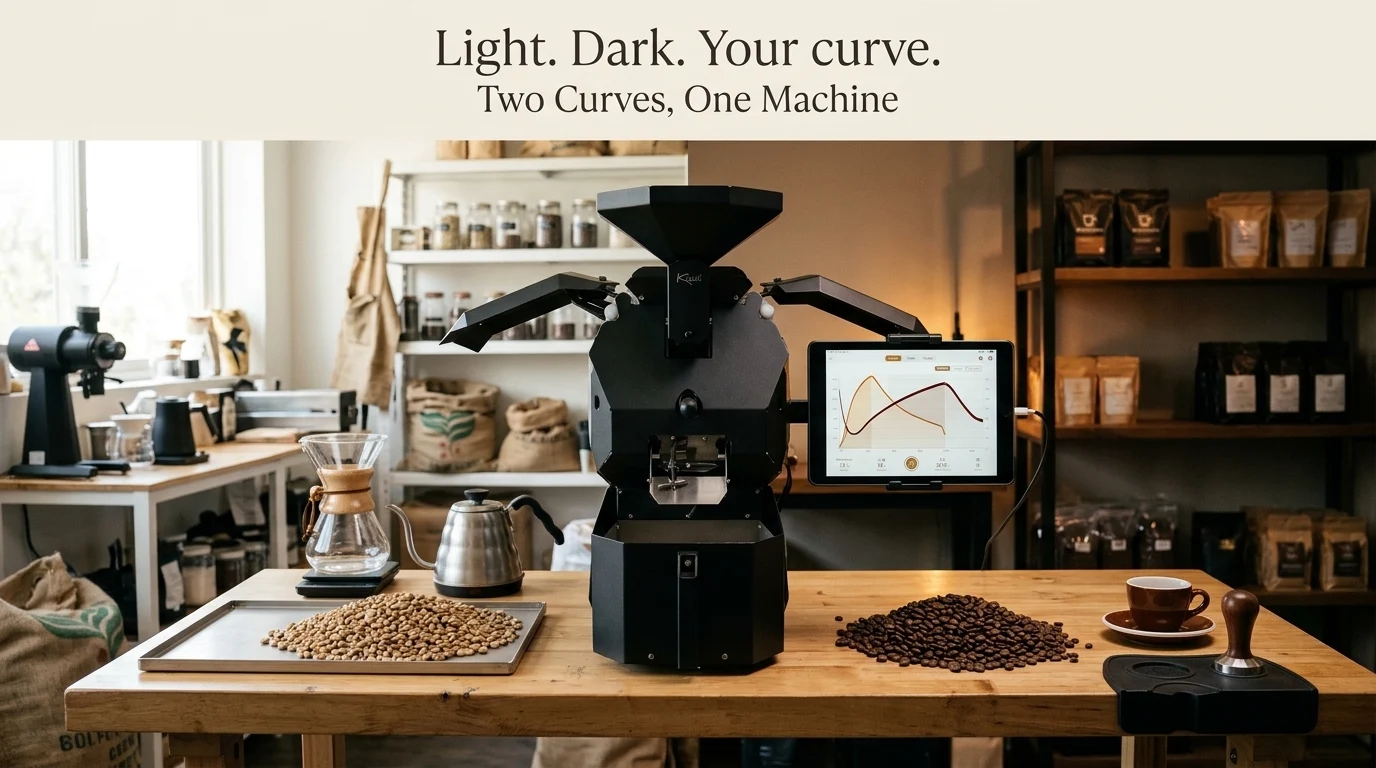
Light Roast Goes Mainstream and the “New Dark Roast” Rises: Roast Levels Diverge in 2026
Subscribe to our emails
Join our email list for exclusive offers and the latest news.
0 Comments