
— A practical guide for Kaleido users
If you’re running a Kaleido, you already know Artisan curves, RoR control, and repeatability. You’ve dialed in your charge temp, your drying phase, first crack, development time. So what’s next?
Between 2025 and 2026, a wave of roasting research emerged that breaks away from conventional thinking. These aren’t gimmicks — they’re tested approaches that change how heat is applied, how green beans are pre-treated, or how parameters are combined. Some of them you can replicate on your Kaleido tomorrow.
Here are four techniques with clear, hands-on application paths.
1. Hydrogen-Style Roasting: The Logic, Not the Gas
Source: UCC Japan achieved the world’s first commercial-scale hydrogen roasting in April 2025, launching “Seven Café Hydrogen-Roasted Coffee” with 7-Eleven.
The finding: Hydrogen as a heat source allows extremely precise, stable temperature control at very low flame output. Cupping notes consistently point to clean, low bitterness, ripe fruit, caramel sweetness, smooth mouthfeel.
Why it matters: One of the hardest things in gas drum roasting is this — at low flame, burners become unstable. Heat output fluctuates. You get “baked” or “stalled” flavors during drying or development. Hydrogen’s combustion characteristics allow precise control even in low BT ranges.
How to apply it on Kaleido: You can’t switch to hydrogen tomorrow, but you can mimic the heat logic. During the drying phase, use lower burner output and a longer drying window, letting the bean heat evenly from inside out rather than “rushing” it with high front-end heat. Specifically: drop your standard drying-phase burner by 10-15%, raise Air slightly to maintain penetration, and cup for reduced bitterness and cleaner sweetness.
2. Frozen Infusion: Changing the Bean Before First Crack
Source: A Chinese patent published February 2026 (CN121569863A).
The finding: Green coffee’s porous structure can be physically disrupted by ice crystals. Mix green beans with a flavor liquid (coconut milk, milk, etc.) at roughly 1:1, freeze at -20°C for 20-30 hours, then thaw, soak, low-temp dry, and roast. Ice crystal growth expands the bean’s pores, allowing deep flavor penetration. Patent data shows significantly increased reducing sugars and soluble proteins, decreased caffeine and flavonoids. During roasting, Maillard reactions run harder — resulting in enhanced sweetness, reduced bitterness and acidity.
Why it matters: This isn’t “flavored coffee.” It changes the bean’s chemical composition before roasting, so the roast itself follows a different flavor pathway. For shops wanting a differentiated product or home roasters who love to experiment, this is a genuinely new route.
Kaleido practical notes: Treated green beans likely carry higher moisture (even after drying, possibly 10-12%). After charge, the TP point will be lower than normal, and the drying phase needs more time. Recommendation: drop charge temp by 5-10°C, extend drying by 1-2 minutes to avoid a “steamed” character before first crack.
3. Chlorogenic Acid Retention Roasting: Roasting for Health
Source: A 2026 study indexed in FAO AGRIS, targeting Caturra, Catimor, and Typica Arabica varieties, using response surface methodology to optimize roasting parameters for maximum retention of chlorogenic acid, gallic acid, catechins, and other antioxidants while reducing caffeine.
The finding: Optimal parameters vary wildly by variety. Catimor: 140°C / 8.2 minutes (far below typical first crack temp). Typica: 161.8°C / 2 minutes. The key insight: extremely short time + precise temperature window can achieve “non-traditional” chemical retention.
Why it matters: This isn’t about “tasting good” in the conventional sense. It’s a technical pathway for functional coffee products (low-caffeine, high-antioxidant). For small roasters developing a “health line,” this is a verifiable direction.
Kaleido challenge and solution: The 140-162°C range means your roast may end before first crack. Kaleido’s low-BT temperature control is critical here. Suggestion: set a low charge temp (around 160-170°C), keep drying short and fast, use high airflow + medium-low burner to hold temperature steady, and drop immediately when the bean reaches target BT. You’ll need to accept a roasting logic completely different from “development time” thinking.
4. The Brazilian Peaberry “Rising Temperature” Rule
Source: Brazilian research on peaberry beans comparing three heat application strategies.
The finding: Peaberries — round, dense, with different heat conduction paths than flat beans — don’t respond well to “constant high” or “constant low” heat. The optimal strategy is T2: rising temperature over time — increasing burner output from 70% to 100% in increments every 3 minutes.
Why it matters: Peaberries often get mixed in with flat beans and roasted together, then “averaged out.” When handled separately, most roasters force-fit flat-bean profiles, resulting in either sharp acidity or uneven development. The T2 strategy gives peaberries a structured, repeatable curve logic.
Kaleido operation: If you regularly handle peaberries (Brazil, Ethiopia, anywhere), build a dedicated profile: charge, set Burner to 70%, then increase by roughly 10% every 3 minutes while stepping Air from 30 up to 50-60%. The goal is to complete the burner ramp before first crack, giving the bean core enough time to catch up with surface temperature.
Turning These Into Your “Second Curve”
None of these methods require new equipment. Kaleido’s precise burner control, programmable profiles, and real-time BT feedback actually make it an ideal platform for reproducing these experiments — more controllable than a gas drum roaster, more penetrating than a small electric sample roaster.
One piece of advice: Don’t try everything at once. Pick one direction that interests you most — hydrogen-logic low-temp slow drying, or peaberry rising heat — run 3-4 small batches as a controlled comparison, cup them, then decide whether to add it to your regular arsenal. In 2026, your roasting edge may not come from how “standard” your curve looks, but from whether you’re willing to let the curve serve the bean — instead of the bean serving the curve.
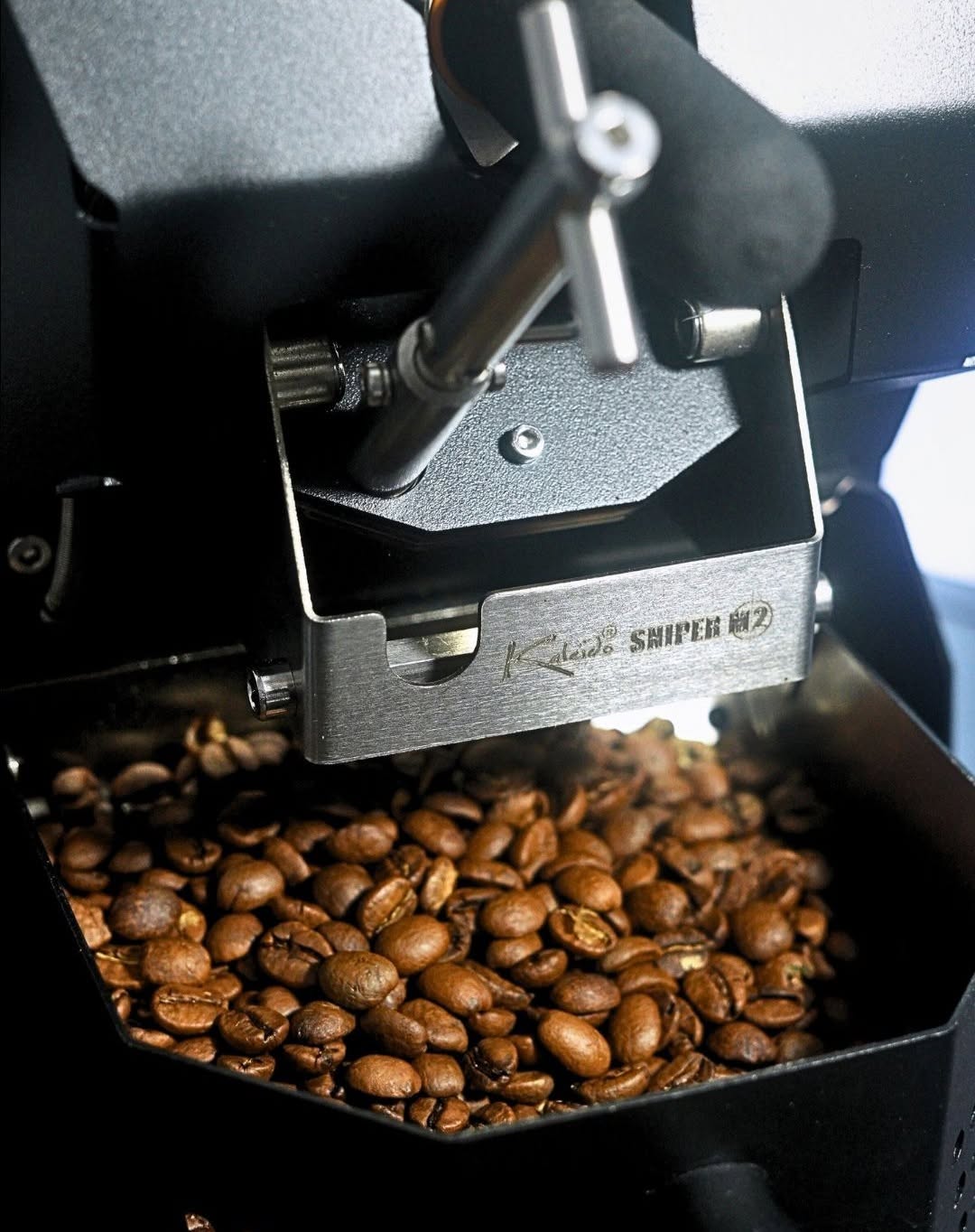
Beyond the Curve: Four New Roasting Techniques Worth Trying in 2026
Subscribe to our emails
Join our email list for exclusive offers and the latest news.
0 Comments