

At Kaleido Roasters, we believe the journey to an exceptional cup is a story written long before beans meet our roasters. The narrative begins at the farm, where biological processing lays the foundational flavor script. It culminates in the roastery, where applied chemistry performs the final, transformative act. For the artisan roaster, understanding this interplay isn’t just academic—it’s the key to unlocking the full, intended potential of every bean.
This article explores the critical stages of biological processing and chemical transformation during roasting, providing a roadmap for how to roast with intention and precision.
Part 1: The Biological Foundation – Processing Methods
After harvest, the urgent question is how to remove the coffee seed from its surrounding fruit. This biological and sometimes microbial process fundamentally sets the flavor direction.
Washed (Wet) Processing
Process: The cherry’s skin and pulp are mechanically removed soon after picking. The beans, still coated in a sticky mucilage, are then fermented in water tanks. This fermentation breaks down the mucilage, after which the beans are thoroughly washed and dried.
Flavor Profile: This method produces a clean, consistent, and classic coffee profile. It highlights the inherent acidity and clarity of the bean, often resulting in bright, complex cups where floral, citrus, or tea-like notes can shine.
Natural (Dry) Processing
Process: The entire coffee cherry is dried intact in the sun on patios or raised beds, a process that can take several weeks. The dried fruit is then hulled off in one step.
Flavor Profile & Science: This is where biology takes center stage. As the fruit dries, controlled microbial fermentation occurs within the cherry. These microbes produce aromatic compounds like esters, alcohols, and aldehydes, which can impart intense fruit-forward, winey, or fermented notes to the bean. The result is a coffee with heavier body, pronounced sweetness, and often berry or tropical fruit flavors.
Honey & Hybrid (Semi-Washed) Processing
Process: A middle ground where the skin and some pulp are removed, but a varying amount of the sugar-rich mucilage is left on the bean during drying.
Flavor Profile: This method aims for the best of both worlds: the clarity and acidity of a washed coffee with some of the enhanced body and sweetness of a natural. The flavor can range from subtly sweet to intensely fruity, depending on the amount of mucilage remaining.
Comparison of Core Processing Methods
Washed Process
Key Characteristic: Fermentation in water, then washed clean.
Typical Flavor Profile: Clean, bright, acidic, complex.
Natural Process
Key Characteristic: Whole cherry dried, leading to fruit fermentation.
Typical Flavor Profile: Sweet, fruity, heavy body, winey.
Honey/Hybrid ProcessKey Characteristic: Skin removed, mucilage dried on bean.
Typical Flavor Profile: Balanced, sweet, creamy body, clean fruit.
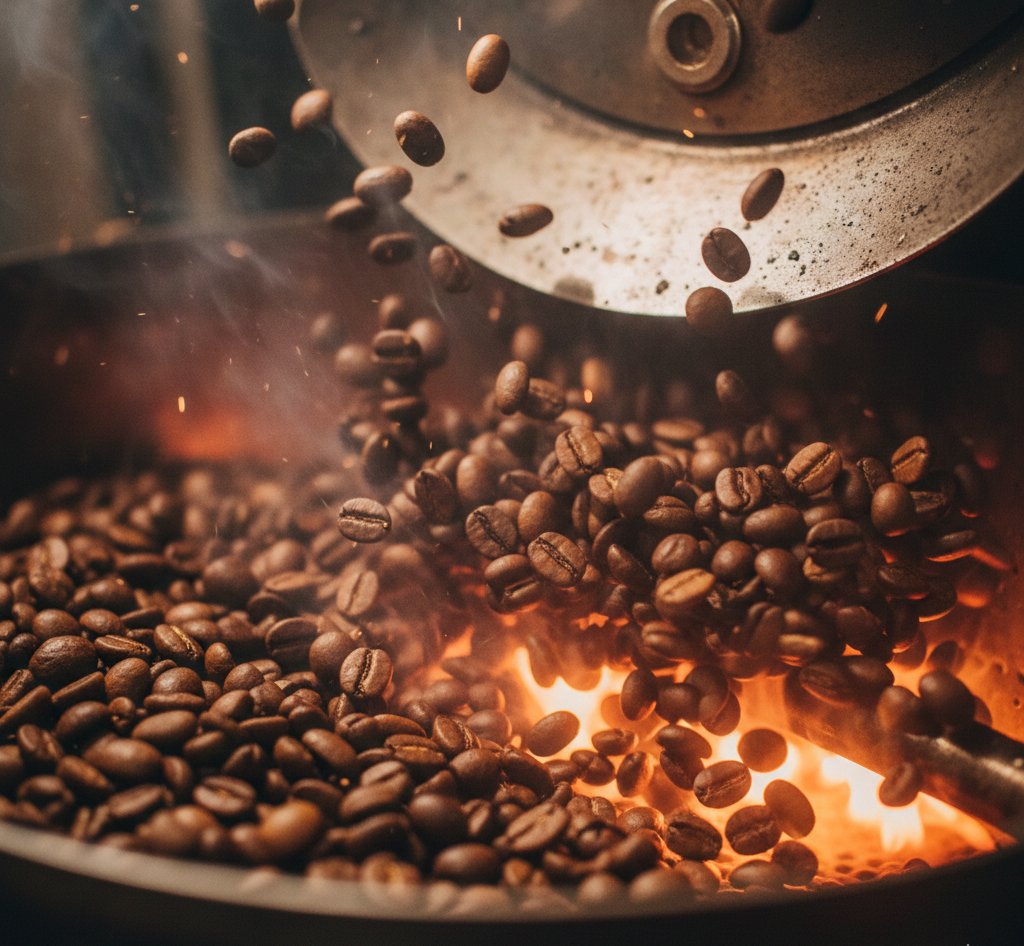
Part 2: The Chemical Transformation – The Roasting Reactions
Roasting is applied pyrolysis, a series of heat-driven chemical reactions that convert a dense, grassy seed into a fragrant, flavorful bean. Mastering these reactions is the roaster’s craft.
The Maillard Reaction: The Foundation of Flavor
Starting around 150°C(302°F), this is the most important reaction in roasting. It occurs between the beans’ amino acids and reducing sugars, creating hundreds of new color, aroma, and flavor compounds.
What it creates: Melanoidins (which provide color, body, and mouthfeel), along with a wide range of savory, nutty, and roasted aromas.
Roaster’s Control: The duration and intensity of the Maillard reaction are powerful levers. A longer Maillard phase can increase body and complexity, while a shorter one can preserve more perceived sweetness and acidity.
Caramelization: The Sweetness Factor
Beginning around 170°C(338°F), heat breaks down complex sugars in the bean into simpler, water-soluble compounds.
What it creates: As the name suggests, this reaction directly contributes to sweet, caramel, and almond-like notes in both aroma and cup flavor.
Degradation of Acids: Balancing Brightness
Acids are highly sensitive to heat.While some like citric and malic acid (contributing fruity brightness) break down during roasting, others like quinic acid (which can add bitterness) are formed.
Roaster’s Control: A roaster can modulate perceived acidity by managing heat application to either preserve desirable fruity acids or mitigate excessive sharpness.
The Roaster’s Mandate: Translating Process into Profile
Understanding these foundations leads to actionable roasting strategy.
1. “Read” the Green Bean: A naturally processed Ethiopian and a washed Colombian may share a similar density but tell wildly different flavor stories. The natural bean already carries intense fruit and body from fermentation; your roast should aim to reveal and balance these, not overshadow them. The washed bean may need a profile that actively develops sweetness and body through careful Maillard and caramelization management.
2. Target the Reaction Phases: Research indicates that the development time (from first crack to end of roast) has a larger impact on final flavor than the earlier drying phase. Use this critical window to fine-tune. For a fruit-forward natural, a moderate development time can preserve its unique aromatics. For a washed coffee needing more structure, extending development can build body and sweetness.
3. Precision is Non-Negotiable: These chemical reactions hinge on specific temperature thresholds and time windows. Inconsistent heat application or unclear data leads to inconsistent cups. The roaster’s tools must provide the clarity and control to reliably hit these targets, batch after batch.
At Kaleido Roasters, we engineer precision for this exact purpose. The Kaleido Sniper isn’t just a heating chamber; it’s a dynamic reaction vessel designed to give you absolute command over these biological and chemical narratives. With intuitive profiling, real-time reaction rate tracking, and consistent thermal performance, it allows you to move from guessing to knowing—to honor the work of the farmer with the precision of a scientist and the artistry of a chef.
Master the story from seed to cup. Let your roasting be the perfect final chapter.
Kaleido Roasters – Engineering Precision, Empowering Artistry.
0 Comments